

|
|
|
 |
 |
 |
 |
 |
 |
 |
 |
 |
 |
 |
 |
 |
 |
Featured composer
Chistopher Kaufman
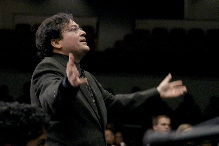 Chistopher Kaufman has composed extensively in the classical and film genres. He is the recipient of awards and commissions from the M.J.F. Fund, The Saltonstall Foundation, CAP Individual Artists Award, UCC Council on the Arts, Sage Fellowship, SOS, Community Arts Partnership Grant, Meet the Composer Grant, was a Featured Artist for Obama Music, Arts and Entertainment and has attended the MACDOWELL ARTS COLONY five times. His music has been featured at the UNITED NATIONS, ACA FESTIVAL OF AMERICAN MUSIC, the INTERNATIONALES MUSIKINSTITUT IN DARMSTADT, JUNE IN BUFFALO, the AMERICAN COMPOSERS ORCHESTRA readings, the ITHACA FESTIVAL, the NORTHEASTERN COMPOSERS CONFERENCE, the CHARLES IVES CENTER FOR AMERICAN MUSIC, ENCORE SUMMER MUSIC and EASTMAN'S MUSICA NOVA.
Chris has written Hudson Valley Music for the Quintet's 30th anniversary season. The piece is for woodwind quintet, a CDTape of Sound Design and Music including Natural Sounds from the Hudson River Valley Environment, and a film of Visual Images created from both Natural Images and the Art of Ken-Cro-Ken and Alice Cotton.
To compose the work, Chris assembled hundreds of natural sounds, many from the Cornell Lab of Ornithology Macaulay Library - the world's largest archive of animal sounds and video. Chris writes "I have worked extensively with these - creating interwoven backdrops of sound over which the musicians perform. I have also created original instruments from the sounds of living creatures. I perform music onto the tape and composed with orchestral sounds to create powerful rhythmic ostinatos in the central portion of the piece and peaceful textures at the end. Throughout the work musical themes are shared by the sound design, the animals and the live players. Hudson Valley Music tells a story. It begins in the ocean at the mouth of the river - the audience hears ocean surf, whalesong and beautiful melody from the players. The sounds of canoe oars paddling is a part of the music and enhances the feeling of being inside the experience. The sounds of Beluga recorded underwater are composed into an eerie soundscape as the surf and whalesong gradually change sides, giving the impression of turning towards the shore. The music flows to the shoreline - you hear shorebirds and water sounds shift from ocean to river water. A 'symphony of bird song' begins the second movement of the work - 'FOREST BINARIES'. Here the musicians perform wild 'nature fugues', solos and climaxes against a backdrop of rhythmic textures created from frogs, insects, birds, orchestral instruments and original instruments created from natural sounds such as the 'oyster toadfish drum'. The music reaches a frenzy - "the madness of unfettered invention" - and works to an infusion of positive energy before moving into the third movement - 'TRANSITION INTO NIGHT'. Here I wove a tapestry of sound from crickets, wolf song chorus, incisive coyote sounds, bats, red-wing blackbirds, bear growls and moose calls. The fourth movement, 'INDUSTRIAL STORM: BIG BONE CREEK' includes sound design music created from industrial sounds such as pile drivers, original instruments created from metallic crashes and clashing armour from film music/sound effect libraries. I also invented a sound to represent the extinct mastadon from elephant and elk calls, bowed gong and thundersheet. Mastadon bones were discovered in the upper Hudson River Valley - a place the Native Americans called 'big bone creek' - and were a part of their mythology. The bones were also collected by founding fathers George Washington and Thomas Jefferson and symbolized to them the 'Violence of Nature' and 'Empire'.The idea of this movement is to create a feeling of fear and immediacy to bring the issue of climate change to the foreground of the listeners' mind. The last movement, '...AND THE EARTH IS OUR SPIRITUAL HOUSE', is beautiful and peaceful yet still retains the passionate intensity of the preceding music. Kaufman did not wish to tie in to a specific religion, but rather the spiritual awe John Muir might have felt when in nature. The principal animal characters return in a new chorus composed of their sounds."
|
Our website improvements have been made possible by the Queens Council on the Arts with support made possible through the JPMorgan Chase Arts and Culture Regrants Program.
|
||
 |
 |
|